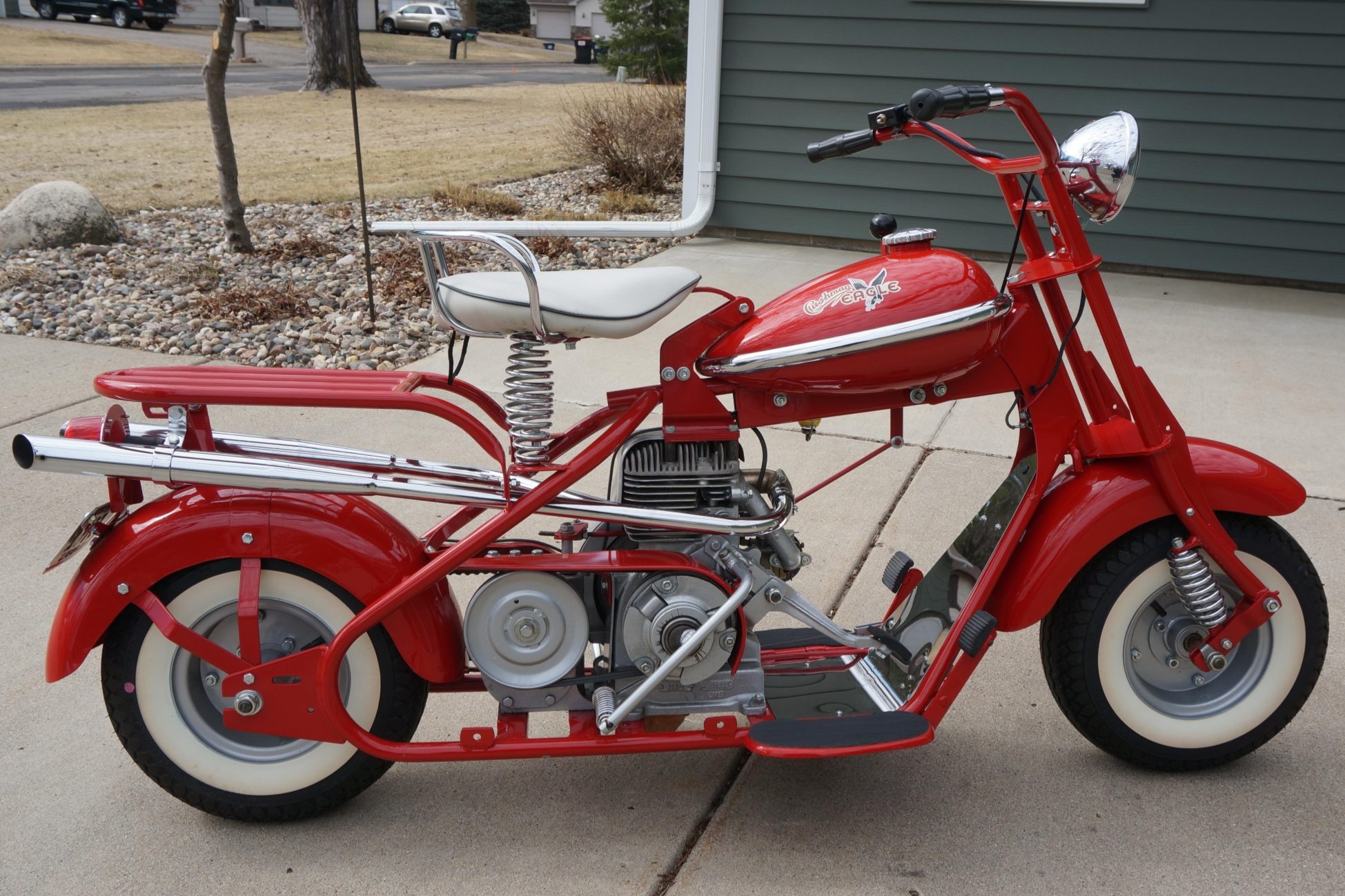
Peda Eagle
Key specifications
Overview
Introducing the 1952 Cushman Eagle, a delightful fusion of American engineering and retro charm that firmly established itself in the scooter market during the post-war boom. As one of Cushman's standout models, the Eagle became synonymous with practicality and style, catering to both urban commuters and leisure riders alike. With its lightweight frame and distinctive design, it was an ideal choice for those looking to navigate city streets or enjoy the open road with ease and flair. The Eagle perfectly encapsulated the spirit of its era, serving as a reliable companion for countless motorcyclists who craved an efficient and stylish ride. At the heart of the 1952 Cushman Eagle is a peppy 318cc single-cylinder, two-stroke engine, engineered for a spirited ride. This powerplant is not only capable of reaching a top speed of 84 km/h (52.2 mph), but it also boasts impressive fuel efficiency, consuming just 3.14 liters per 100 km—a remarkable 74.91 mpg. The Eagle's carburettor fuel system ensures a responsive throttle, allowing riders to experience a lively yet manageable power delivery. Thanks to its belt final drive, the ride is smooth and low-maintenance, making it a practical option for both new riders and seasoned enthusiasts seeking a taste of vintage motoring. The 1952 Cushman Eagle is packed with features that reflect its innovative design philosophy. With expanding drum brakes at both the front and rear, riders can expect dependable stopping power, ensuring safety and control even in challenging conditions. The scooter's lightweight construction not only enhances its agility but also makes it incredibly easy to maneuver through tight spots—a true urban warrior. Additionally, the Eagle's retro aesthetic, characterized by its sleek body lines and distinct color options, turns heads wherever it goes, appealing to those with a penchant for classic motorcycles. In summary, the 1952 Cushman Eagle remains an enduring symbol of innovation and style in the scooter category, appealing to enthusiasts who appreciate both its nostalgic charm and practical functionality.
Pros
- Exceptional Fuel Efficiency: With a consumption rate of 74.91 mpg, the Eagle is an economical choice for riders looking to save on fuel costs.
- Lightweight and Maneuverable: The compact design allows for easy handling, making it perfect for both city commuting and leisurely rides.
- Classic Aesthetic Appeal: The vintage design is a magnet for admirers, making the Eagle a standout piece in any motorcycle collection.
Cons
- Limited Speed and Power: While adequate for city riding, the top speed may feel underwhelming for those looking for a more thrilling experience.
- Drum Brakes: Although effective, they may not provide the same level of stopping power as modern hydraulic disc brakes, particularly in emergencies.
- Two-Stroke Engine Maintenance: The engine requires regular upkeep to maintain performance and longevity, which could be a consideration for less mechanically inclined riders.
Technical details
Source specification data
- Make
- Cushman
- Model
- Eagle
- Category
- Scooter
- Top Speed
- 84.0 km/h (52.2 mph)
- Fuel System
- Carburettor
- Displacement
- 318.00 ccm (19.40 cubic inches)
- Engine Details
- Single cylinder, two-stroke
- Fuel Consumption
- 3.14 litres/100 km (31.8 km/l or 74.91 mpg)
- Greenhouse Gases
- O2
- g/km. (
- O2
- -
- Carbon
- dioxide emission)
- Transmission Type Final Drive
- Belt
- Seat
- Single spring-mounted
- Rear Brakes
- Expanding brake (drum brake)
- Front Brakes
- Expanding brake (drum brake)