Why Engine Cooling Matters More Than You Think
When most riders shop for a new motorcycle, they focus on horsepower figures, seat height, or color options. Engine cooling technology rarely makes the shortlist — but it should. The way your engine manages heat has a cascading effect on performance, reliability, fuel efficiency, emissions compliance, and even the sound and feel of the bike beneath you. As we move into 2026, increasingly strict global emissions regulations are pushing the industry in clear directions, making this conversation more relevant than ever.
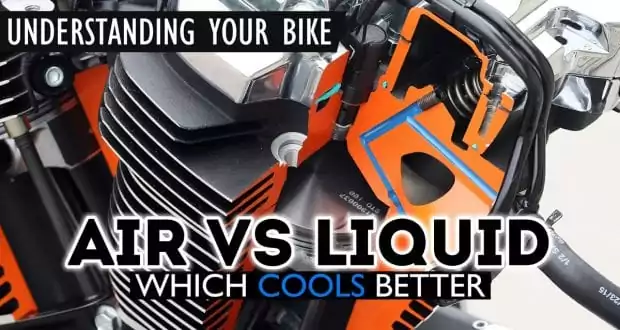
Let's break down what each system actually does, how they differ in the real world, and which type of rider benefits most from each approach.
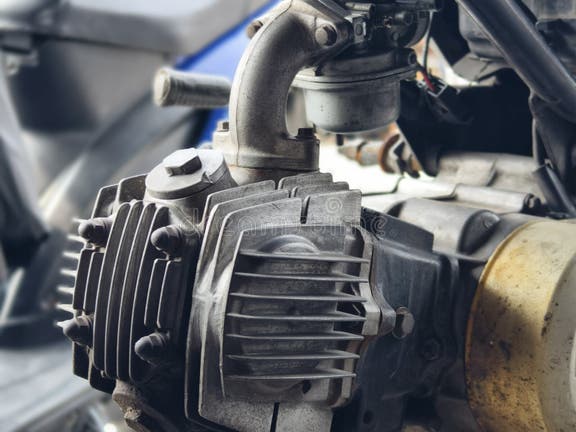
How Air-Cooled Engines Work
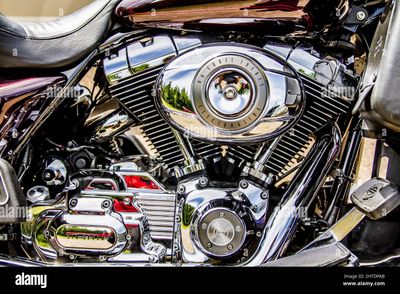
Air-cooled engines are the original motorcycle solution. They rely on airflow passing over large metal fins on the cylinder head and barrel to dissipate heat generated by combustion. It's elegantly simple: the faster you ride, the more air flows over those fins, and the cooler the engine runs. At idle or in stop-and-go traffic, however, cooling efficiency drops significantly.
The design traces its roots back over a century and remains the choice for iconic machines like the Harley-Davidson Softail lineup, the Royal Enfield Meteor 350, and the beloved Kawasaki W800. Part of what makes these bikes so appealing is precisely their mechanical honesty — you can see the engine working, the fins glinting in sunlight, the pushrod tubes rising from the cases.
Pros of Air-Cooled Engines
- Simplicity and reliability: Fewer components means fewer things to go wrong. No water pump, no radiator, no coolant lines, no thermostat.
- Lower purchase and maintenance costs: Without a cooling circuit to service, ongoing maintenance is cheaper and less frequent.
- Character and aesthetics: Finned cylinders give air-cooled bikes a classic, mechanical look that many riders find deeply appealing.
- Lighter weight: Removing the liquid-cooling hardware can save several kilograms, which matters on smaller bikes.
- Easier home maintenance: The simplicity invites riders to wrench themselves, fostering a deeper connection with the machine.
Cons of Air-Cooled Engines
- Heat management in traffic: Stationary or slow-moving traffic lets heat build rapidly. Riders' legs can cook next to a big V-twin on a summer afternoon.
- Tighter emissions tolerances are harder to meet: Consistent combustion temperatures are difficult without liquid cooling, making it harder to satisfy Euro 5+ and upcoming Euro 6 standards.
- Performance ceiling: Higher compression ratios and aggressive tuning generate more heat than air alone can handle reliably.
- Temperature variability: Engine behavior can shift noticeably between a cold winter morning and a hot summer commute.
How Liquid-Cooled Engines Work
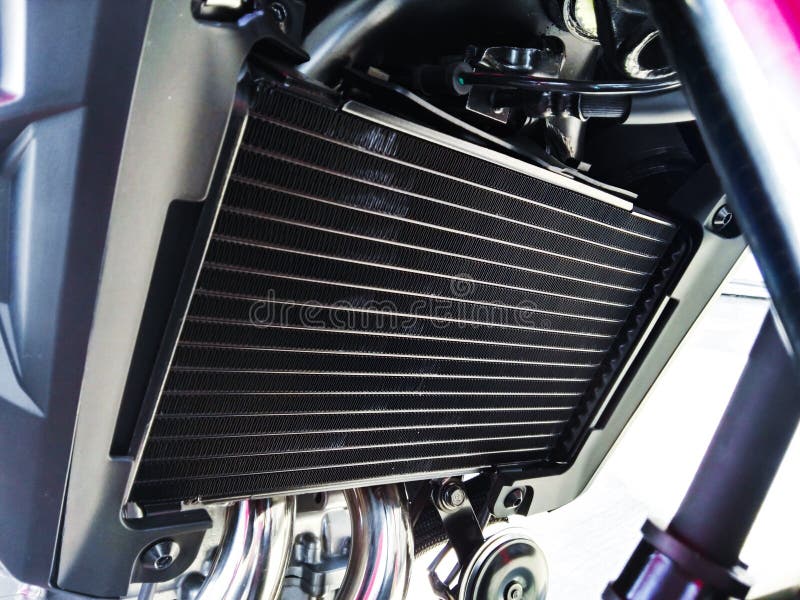
Liquid-cooled engines circulate a water-and-antifreeze mixture through channels cast into the engine block and head. This coolant absorbs heat and carries it to a radiator mounted at the front of the bike, where airflow (or electric fans at idle) dissipates it. A thermostat regulates temperature, keeping the engine in an optimal operating window regardless of ambient conditions or riding pace.
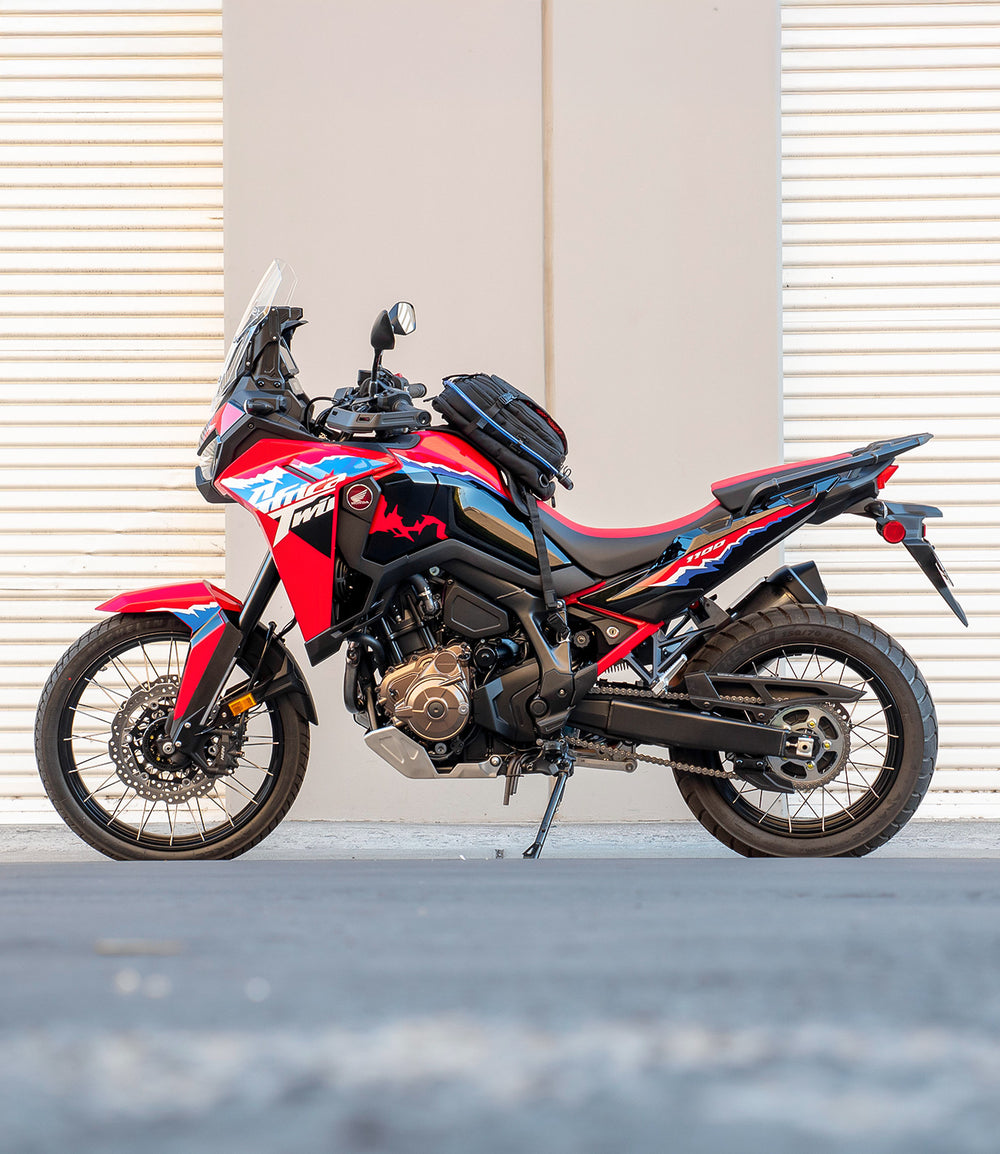
This technology now dominates the performance and adventure segments. Machines like the Honda Africa Twin, BMW R 1300 GS, Ducati Panigale V4, and Kawasaki Ninja ZX-10R all rely on liquid cooling to sustain their impressive output figures over extended hard use.

Pros of Liquid-Cooled Engines
- Consistent operating temperature: Tighter thermal control means more predictable power delivery and better fuel efficiency across all conditions.
- Higher performance potential: Controlled temperatures allow engineers to push compression ratios, boost power output, and reduce internal tolerances.
- Better emissions compliance: Stable combustion temperatures make it far easier to meet modern catalytic converter and oxygen sensor requirements.
- Longevity under hard use: Engines that don't overheat wear more slowly. For sport and adventure riders covering big miles quickly, this is significant.
- Quieter operation: Liquid-cooled engines can be tuned to run more quietly, which matters both for noise regulations and rider comfort on long tours.
Cons of Liquid-Cooled Engines
- Added complexity: More components mean more potential failure points — coolant leaks, water pump failures, and radiator damage from debris or crashes.
- Higher cost: Manufacturing complexity adds to the purchase price, and servicing the cooling system (flushing coolant, checking hoses, replacing the water pump) adds to running costs.
- Weight penalty: Radiators, coolant, hoses, and pumps add mass, typically between 3 and 8 kilograms depending on the system.
- Aesthetic tradeoffs: Radiators and hoses can clutter the visual lines of a motorcycle, though designers have become increasingly clever at integrating them.
The 2026 Emissions Factor
One of the most significant forces shaping engine development heading into 2026 is global emissions legislation. Euro 5 standards are already forcing air-cooled manufacturers to work harder than ever, and the transition toward Euro 6 in European markets — alongside stricter California Air Resources Board (CARB) standards in the US — will create additional pressure. Liquid cooling gives engineers far greater control over the combustion process, making compliance considerably easier.
This doesn't mean air-cooled engines are disappearing. Brands like Harley-Davidson have invested in advanced fuel injection and catalytic systems to keep their V-twin lineup compliant. Royal Enfield continues to develop air-cooled and oil-cooled platforms that meet current standards. But the high-performance and high-displacement segments will almost certainly be liquid-cooled territory going forward.
Oil-Cooled and Air-Oil-Cooled: The Middle Ground
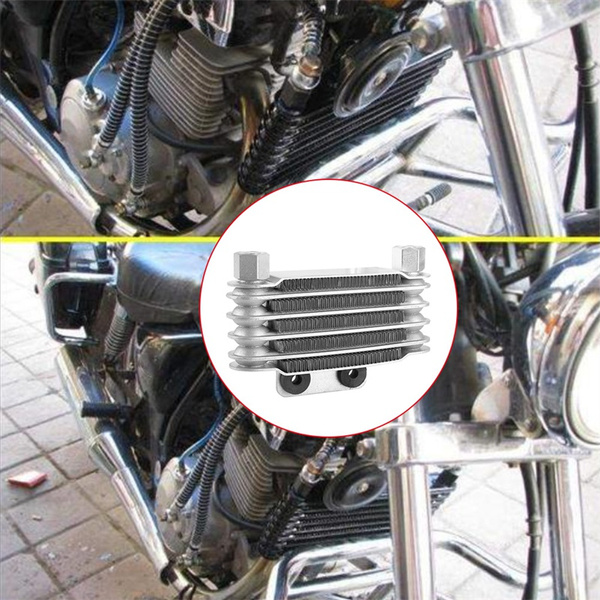
It's worth noting a hybrid approach that several manufacturers employ: oil cooling. Bikes like the Suzuki GSX-S1000 (in earlier iterations) and several Royal Enfield models use an oil cooler to supplement air cooling, circulating engine oil through a small external radiator. This adds meaningful thermal capacity without the full complexity of a liquid-cooling circuit. It's a pragmatic solution that extends the performance envelope of air-cooled designs while preserving much of their simplicity.
Which Should You Choose?
The honest answer depends entirely on how and where you ride.
- Choose air-cooled if you value character, simplicity, and lower running costs. If you're drawn to cruisers, retro bikes, or classic standards and your riding involves open roads rather than track days or long desert slabs, an air-cooled engine will serve you beautifully.
- Choose liquid-cooled if you ride hard, commute in traffic, cover big distances, or need consistent peak performance. Adventure tourers, sport bikes, and modern standards in the mid-to-large displacement range are almost universally liquid-cooled for good reason.
- Consider oil-cooled as a genuine middle ground if you want a slightly more capable air-cooled machine with better thermal margins for spirited riding.
Final Thoughts
Both cooling philosophies have genuine merit, and both will remain relevant in 2026 and beyond. The key is matching the technology to your riding reality. An air-cooled Harley-Davidson Softail Standard rolling through the countryside is in its element. That same bike gridlocked in Phoenix summer traffic is fighting its fundamental design. A liquid-cooled Honda Africa Twin is flawless grinding through Mongolian mountain passes — its cooling system paying dividends precisely when conditions are most demanding.
Understanding the difference doesn't just make you a smarter buyer. It makes you a more connected rider — someone who appreciates why their machine behaves the way it does, and what it needs to keep delivering mile after mile.