The Hybrid Motorcycle Has Arrived — And It's Wearing a Kawasaki Badge
There's been no shortage of promises from motorcycle manufacturers about electrification, but Kawasaki has done something the others haven't yet dared: they've shipped a genuine parallel hybrid middleweight naked bike and asked the world to ride it. The 2026 Kawasaki Z7 Hybrid isn't a concept or a press-release fantasy. It's a real motorcycle, sitting in dealerships with a real price tag, and we spent seven days putting it through its paces to find out if the hybrid format actually makes sense on two wheels.
Our test route covered everything from slow-and-go urban commuting in the city to spirited canyon carving on a favourite stretch of mountain road, with a healthy dose of motorway miles in between. The goal was simple: force the Z7 Hybrid to reveal itself in every context a real owner might face, and judge whether the two-power-source setup is a genuine advantage or an engineering novelty that adds weight and complexity without meaningful reward.
What You're Actually Getting Under the Tank
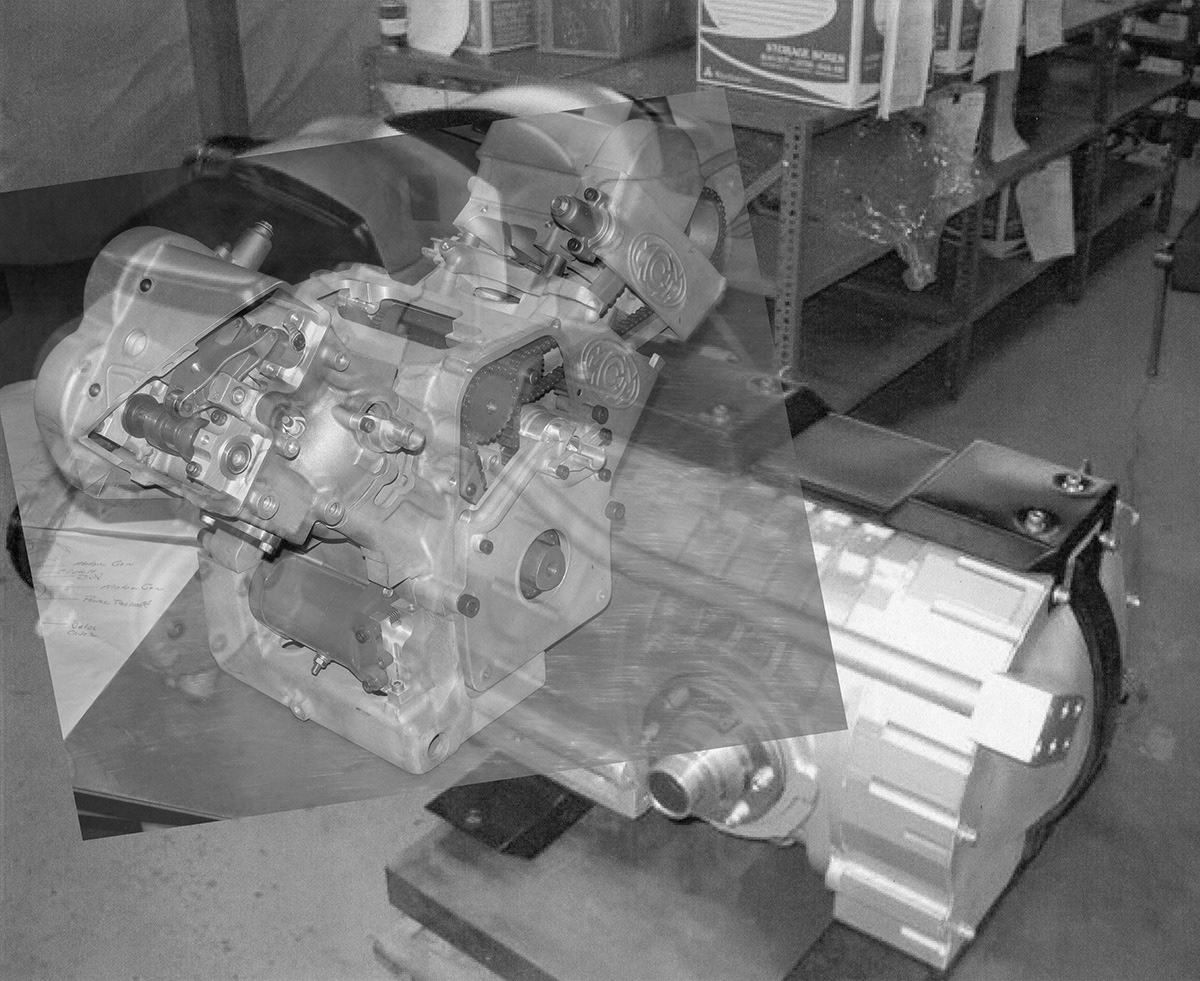
The Z7 Hybrid pairs a 451cc parallel-twin petrol engine — a detuned and reworked descendant of Kawasaki's proven Z500 platform — with a compact electric motor integrated into the transmission. A 48V lithium-ion battery pack sits low in the frame to keep the centre of gravity manageable. Kawasaki claims a combined system output of around 69 horsepower, but the more interesting number is torque: the electric motor fills in the low-rpm gap that small parallel-twins often struggle with, resulting in a remarkably linear pull from idle upward.
The system operates in three core modes: EV mode for short electric-only stints (rated at roughly 15–20 kilometres of urban range), Hybrid mode where both power sources work in concert according to riding conditions and throttle demand, and Charge mode where the petrol engine actively replenishes the battery under light load. There's no plug-in charging — the Z7 Hybrid tops up its own battery through regenerative braking and the engine, which is a deliberate choice that keeps the ownership experience familiar to traditional motorcycle riders.
Day One to Three: Urban Commuting — Where Hybrid Logic Pays Off
In the city, the Z7 Hybrid feels genuinely clever. Slipping into EV mode for the first mile off a cold start means zero engine noise, zero vibration, and smooth, responsive acceleration off traffic lights. Pedestrians don't scatter, conversations don't get interrupted, and the riding experience feels almost meditative. Battery depletion in this mode is faster than Kawasaki's marketing might suggest in real traffic conditions, but the bike transitions seamlessly back to the petrol engine or hybrid mode without any jarring mechanical interruption — it's as smooth a handoff as you'll find.
Stop-start traffic is where we noticed the biggest quality-of-life improvement over a conventional naked. The electric motor handles low-speed crawling with an ease the petrol engine alone couldn't replicate, and regenerative braking — while subtle compared to a full EV — adds a useful engine-braking sensation that experienced riders will appreciate. Fuel consumption in urban mixed use came in at an impressive 3.4 litres per 100 kilometres across our test days. That is a meaningful real-world saving.
Mid-Week: Highway Miles and the Hybrid's Limitations Emerge
Sustained motorway riding is where the Z7 Hybrid's compromises become most apparent. At 110–120 km/h, the bike sits comfortably and the 451cc engine pulls confidently, but it's working noticeably harder than a larger-displacement naked in the same class. The electric assistance is minimal at these speeds — the system prioritises charging the battery over supplementing performance at sustained high throttle — and wind protection is, predictably, nonexistent given the naked bike format.
Overtaking requires some planning. There's decent mid-range punch when you roll the throttle aggressively, triggering a boost from the electric motor in hybrid mode, but riders used to 650cc or 750cc singles won't find the same effortless surge. The Z7 Hybrid is a city-and-canyon machine that can handle highway duty, not a highway machine that happens to pass through canyons. That's an important distinction to understand before buying.
Weekend Blast: Canyon Roads Reveal the Fun Factor
Strip away the powertrain conversation and the Z7 Hybrid is simply a very good naked middleweight. Kawasaki's chassis engineers deserve enormous credit here — despite the added weight of the battery and electric motor (the bike tips the scales at 221 kg wet, roughly 18 kg heavier than the Z500), the handling remains engaging and confidence-inspiring. The 41mm inverted front forks and horizontal rear linkage shock provide well-judged damping, and the 17-inch wheels with Dunlop Sportmax tyres grip with authority through a fast sequence of corners.
The added weight is noticeable on very tight hairpins at low speed, but once the bike is leaned over and the pace picks up, it largely disappears. The hybrid powertrain's torque filling is a genuine handling asset on canyon roads — throttle response is consistent and predictable in a way that small-displacement petrol twins often aren't, and corner exits feel unusually smooth because there's no low-rpm hesitation to manage.
Technology, Ergonomics, and Daily Living
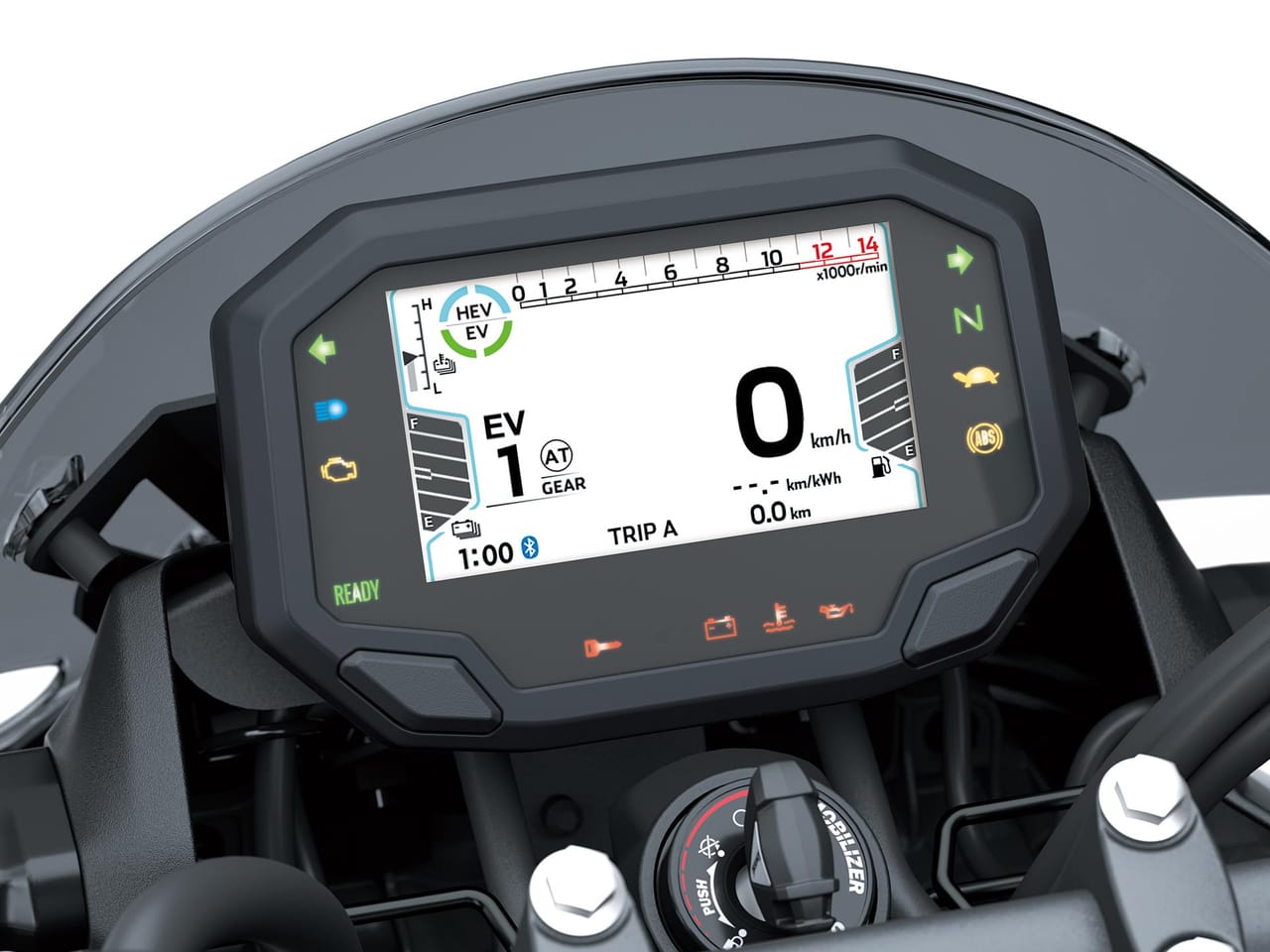
- TFT Display: A crisp 4.3-inch colour TFT shows power flow between motor, engine, and battery in real time — genuinely useful for understanding system behaviour, not just a gimmick.
- Riding Modes: Road, Rain, and Sport modes are supplemented by the EV/Hybrid/Charge selections, giving riders meaningful control over how the system behaves.
- Ergonomics: The upright naked position suits riders from around 165 cm to 190 cm comfortably. The seat height of 810 mm is accessible for most.
- Connectivity: Bluetooth connectivity via the Kawasaki Rideology app tracks ride data and allows some mode customisation from a smartphone.
- Service Intervals: Kawasaki has kept service intervals at 6,000 km for oil changes, consistent with non-hybrid models in the range — a deliberate move to avoid alienating existing dealer networks.
The Verdict: Bold, Imperfect, and Genuinely Exciting
The 2026 Kawasaki Z7 Hybrid is not a perfect motorcycle. The electric-only range is modest, the added weight is real, and highway performance requires realistic expectations. But perfection was never the point. What Kawasaki has built is a credible, rideable, and often genuinely enjoyable proof-of-concept for hybrid motorcycling — one that makes tangible sense for urban and mixed-use riders who want reduced running costs and smoother city performance without giving up the feel and flexibility of a petrol engine.
Priced at the upper end of the middleweight naked segment, it asks riders to pay a premium for the technology. Those who clock significant urban miles will likely recover some of that cost in fuel savings. Those who spend most of their time on open roads may find the value proposition harder to justify. But for curious early adopters and urban warriors who love a canyon run on the weekend, the Z7 Hybrid is something we haven't seen before: a hybrid motorcycle that's actually worth riding, not just worth talking about.