The Most Technologically Advanced Guzzi Ever Built
Moto Guzzi doesn't rush. The Mandello factory, nestled on the banks of Lake Como since 1921, has always operated on its own timeline — one measured in tradition, craftsmanship, and a stubborn refusal to follow trends for their own sake. So when the V100 Mandello arrived with active aerodynamics and electronically adjustable suspension, it felt significant. Not just for Guzzi, but for the entire sport-touring segment. For the 2026 model year, the Mandello S gets revised software for both systems, a slightly updated seat profile, and two new colorways. We clocked 900 miles across four days to find out if the tech genuinely works — or if it's clever marketing dressed up as engineering.
The Active Aero: Gimmick or Genuine Advantage?
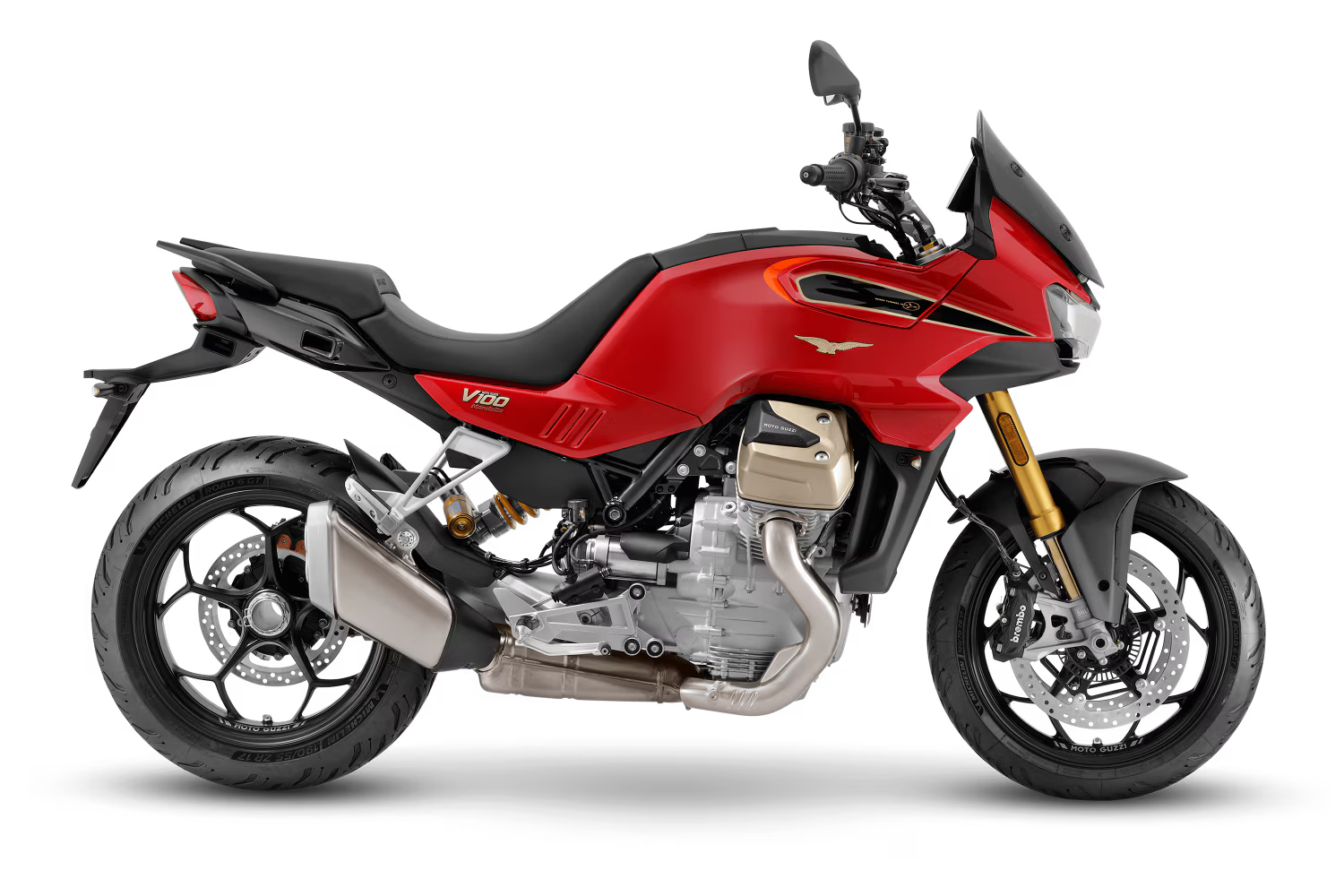
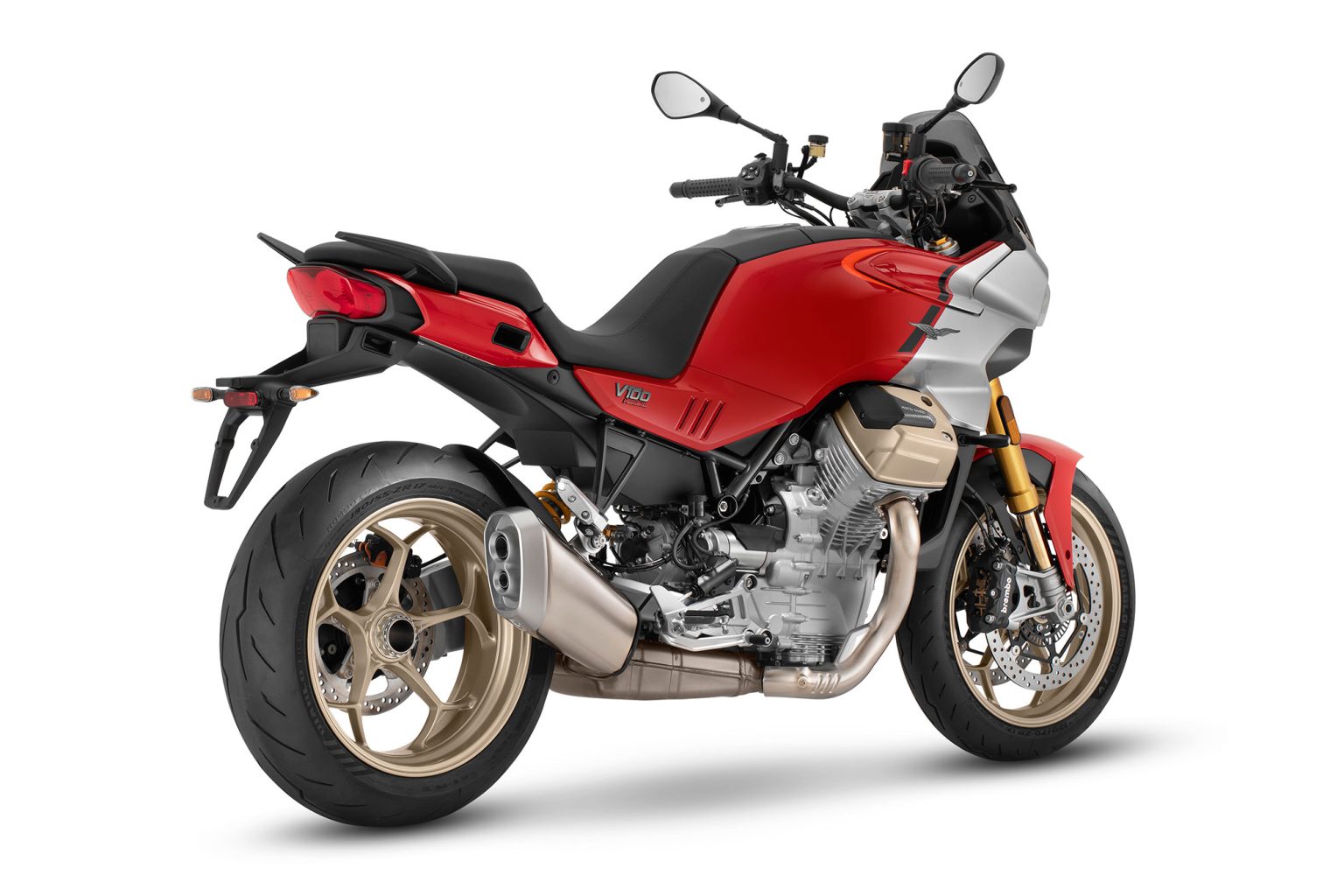
The V100 Mandello S's headline feature remains its active aerodynamic system — two motorized wing panels integrated into the fuel tank fairing that open and close automatically based on speed, lean angle, and riding mode. Below roughly 50 mph, they retract for a cleaner silhouette and less drag in urban environments. Above that threshold, they progressively deploy to redirect airflow and reduce wind buffeting on the rider.
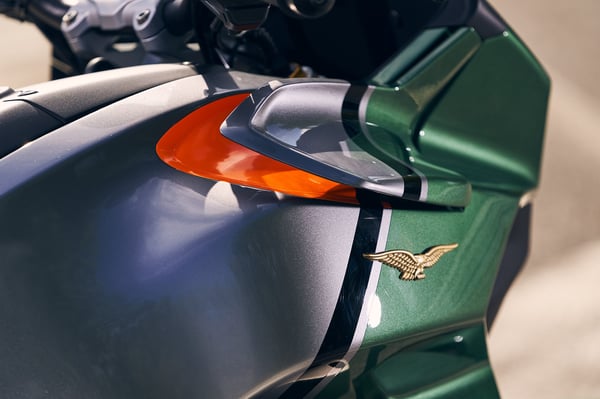
On paper, it sounds like a party trick. In practice, it genuinely transforms the riding experience at speed. Cruising at motorway speeds between 70 and 90 mph, the difference with the wings fully deployed versus manually overridden to their closed position is immediately noticeable. Wind pressure on the chest drops considerably, and the chronic neck fatigue that plagues long-distance riders on naked or semi-faired bikes is meaningfully reduced. Push beyond 100 mph — we did, briefly, on a closed test section — and the stability advantage becomes undeniable. The Mandello S tracks straighter and feels less nervous in gusty crosswinds than virtually any comparable bike in this class.
The system also reacts to lean angle, trimming the wings slightly when the bike is tipped over to reduce aerodynamic interference mid-corner. It's subtle enough that you stop thinking about it within the first hour, which is exactly the point. The best technology is the kind that disappears into the background and simply makes things better.
Semi-Active Suspension: Öhlins Does the Heavy Lifting
The Mandello S rides on a fully electronic Öhlins Smart EC 2.0 suspension package — 48mm USD fork up front, a monoshock at the rear — with continuous real-time damping adjustment managed by the bike's IMU. The system samples road conditions and rider inputs dozens of times per second, making micro-adjustments that no human could replicate manually.
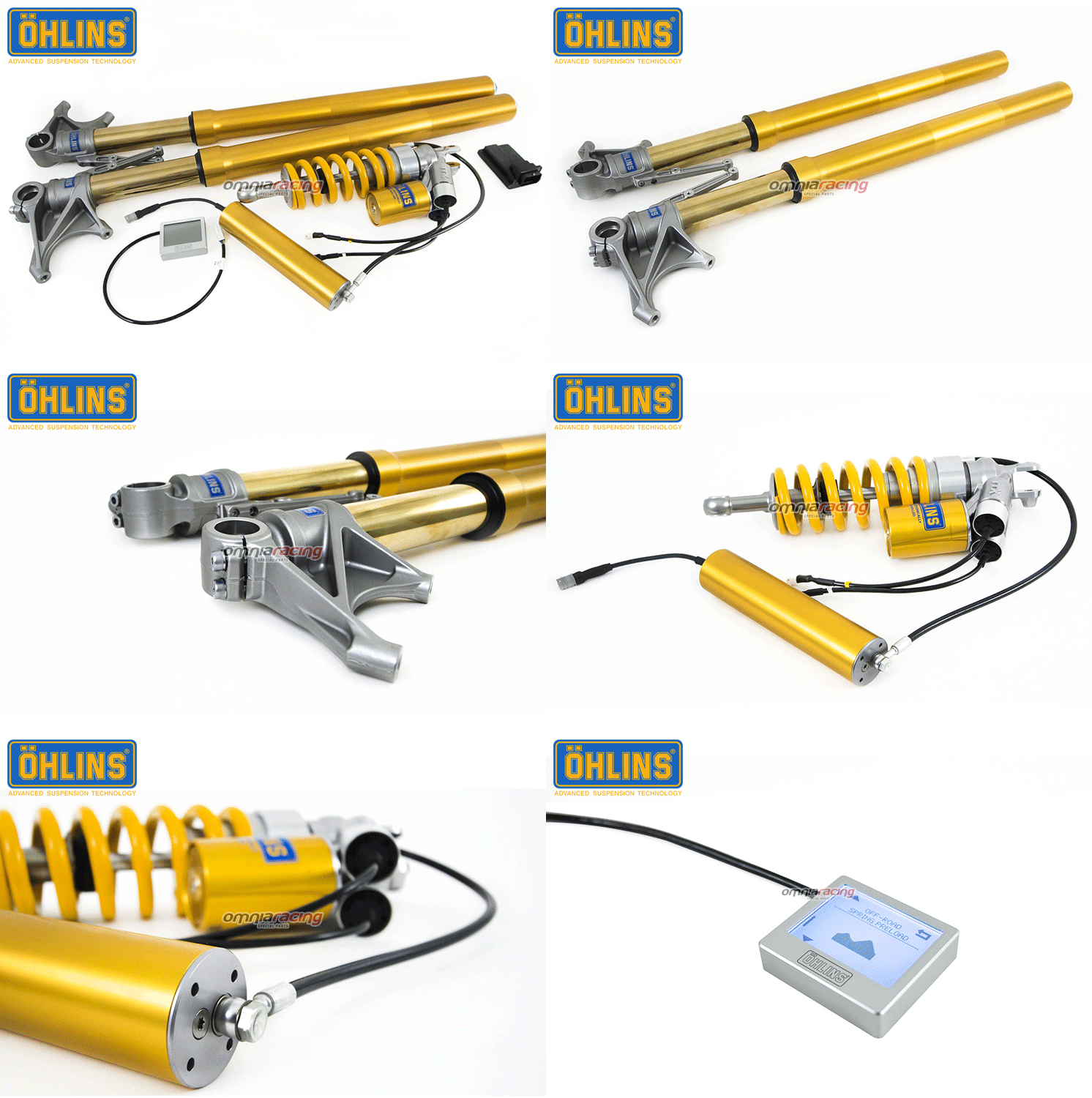
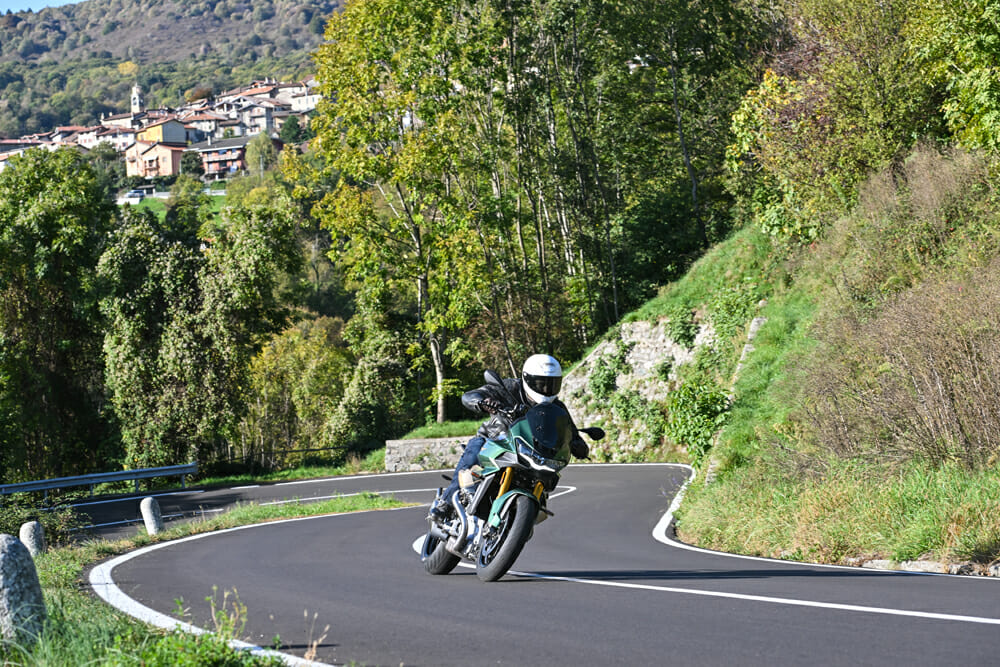
We deliberately sought out poor road surfaces: frost-heaved back roads in the mountains, cobbled town centers, and the kind of patched tarmac that would rattle fillings loose on a bike with conventional suspension. The Öhlins unit absorbed punishment with an almost eerie composure. There's a suppleness to the ride quality that's genuinely impressive for a motorcycle of this weight — the Mandello S tips the scales at around 228kg wet — and it never felt unsettled or vague.
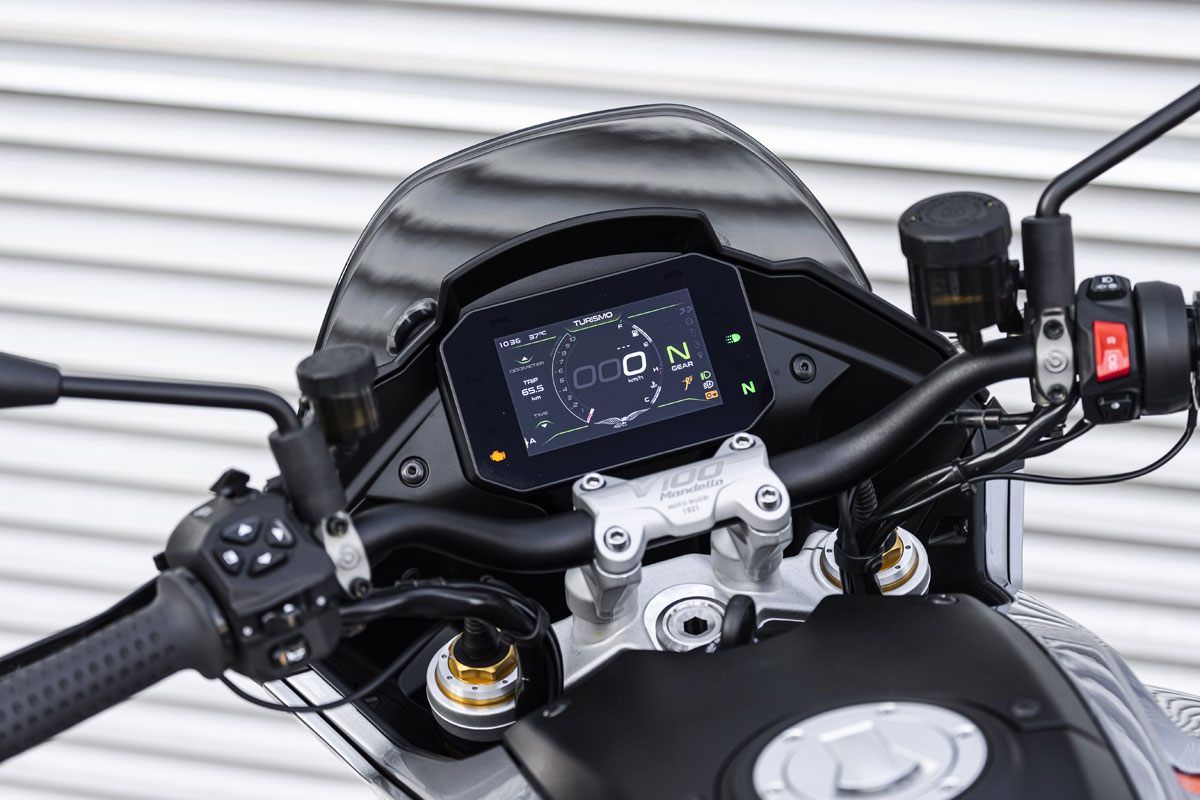
Four suspension modes are selectable through the TFT interface: Comfort, Road, Sport, and a customizable Advanced mode. The differences between Comfort and Sport are meaningful rather than marginal. Sport firms things up noticeably for more precise steering response and reduced dive under hard braking, while Comfort smooths out the bumps for longer days in the saddle. Road sits in the middle and covers the majority of real-world riding conditions capably.
Handling and Chassis Dynamics
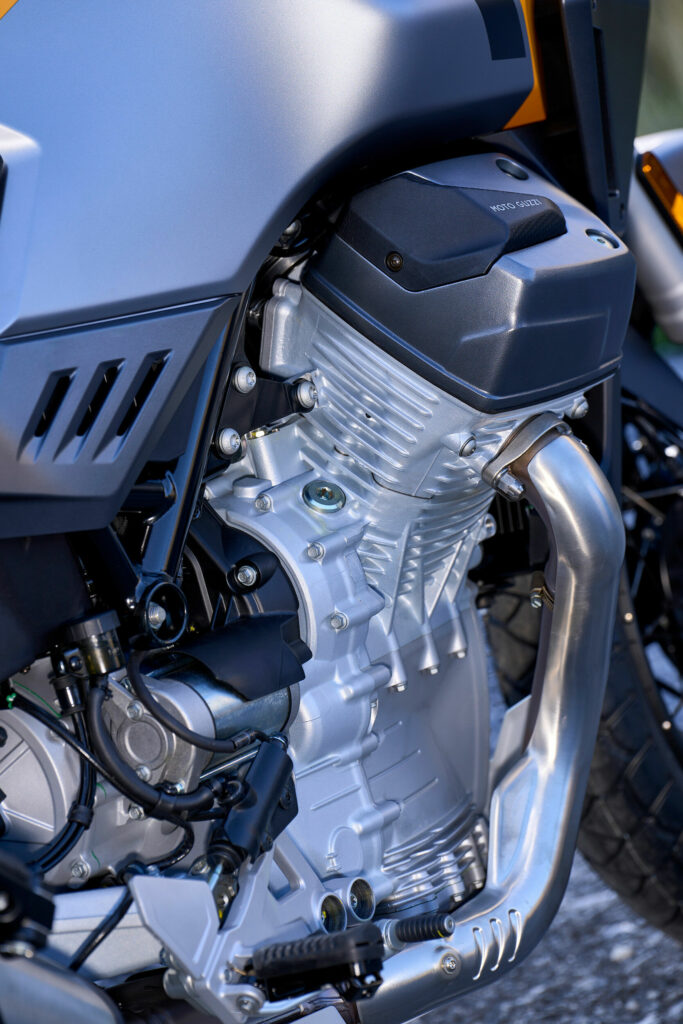
Strip away the electronics and the Mandello S is built on a solid foundation. The 90-degree transverse V-twin — a configuration as synonymous with Guzzi as the lake it overlooks — displaces 1042cc and produces a claimed 115 horsepower and 105Nm of torque. It's not a firebreather by modern standards, but the character of that engine is something numbers cannot capture. The torque delivery is smooth and progressive, the exhaust note is deeply satisfying, and there's a distinctive mechanical pulse to every mile that reminds you this is not just another middleweight adventure tourer.
Handling is confident and involving. The Mandello S turns in with more precision than its weight suggests, and the Brembo Stylema brakes offer excellent feel and stopping power. Cornering clearance is generous, and the standard Pirelli Scorpion Trail II rubber offers a good balance of grip and longevity. Over the course of our 900-mile test, we had complete confidence in the chassis in every situation we encountered.
Everyday Usability and Technology Integration
The 6.5-inch TFT display is crisp and logically organized, with a responsive menu structure that doesn't require consulting the manual mid-ride. Bluetooth connectivity, turn-by-turn navigation (via smartphone mirroring), and a USB-C charging port are all present. The MIA multimedia system works reliably with both iOS and Android.
- Five riding modes: Veloce, Turismo, Pioggia, Off-Road, and a fully customizable Advanced mode
- Cornering ABS and cornering traction control managed by a 6-axis IMU
- Bi-directional quickshifter standard on the S trim
- Heated grips and full LED lighting across the range
- Optional luggage system integrates cleanly with the bodywork
Wind protection from the electrically adjustable screen is better than average, and the seat — revised for 2026 — is more comfortable over long distances than its predecessor, though taller riders above 6ft 2in may still find themselves wanting a few extra millimeters of height.
The Price Question
The 2026 Moto Guzzi V100 Mandello S carries a significant premium over the standard Mandello, and positions itself firmly against serious competition: the BMW R 1250 RS, Ducati Multistrada V2 S, and Aprilia RS 660 Extrema all occupy adjacent territory in the buyer's mind. None of them, however, offer active aerodynamics in a production package this refined.
Whether that justifies the price depends entirely on what you value. If you cover serious miles — regular touring, long commutes, weekend sport riding — the combination of active aero and semi-active suspension genuinely reduces fatigue and increases confidence in a measurable way. This is technology with a tangible return on investment for the right rider.
Final Verdict
After 900 miles, the 2026 Moto Guzzi V100 Mandello S earns its place as the most compelling flagship the brand has produced in decades. The active aerodynamics are not a gimmick — they work, and they work well. The Öhlins semi-active suspension is among the best implementations of that technology available on any production motorcycle at any price. Wrap that in the characterful Guzzi V-twin and Italian styling that stops people in petrol station forecourts, and you have a sport-tourer that makes a genuinely strong case for itself.
It is not perfect — fueling can feel slightly abrupt at low throttle openings in Sport mode, and the infotainment interface occasionally requires too many button presses for simple tasks. But these are minor complaints about an otherwise exceptional machine. If you're in the market for a technically sophisticated, long-distance capable sport tourer with genuine personality, the Mandello S deserves to be at the top of your test ride list.