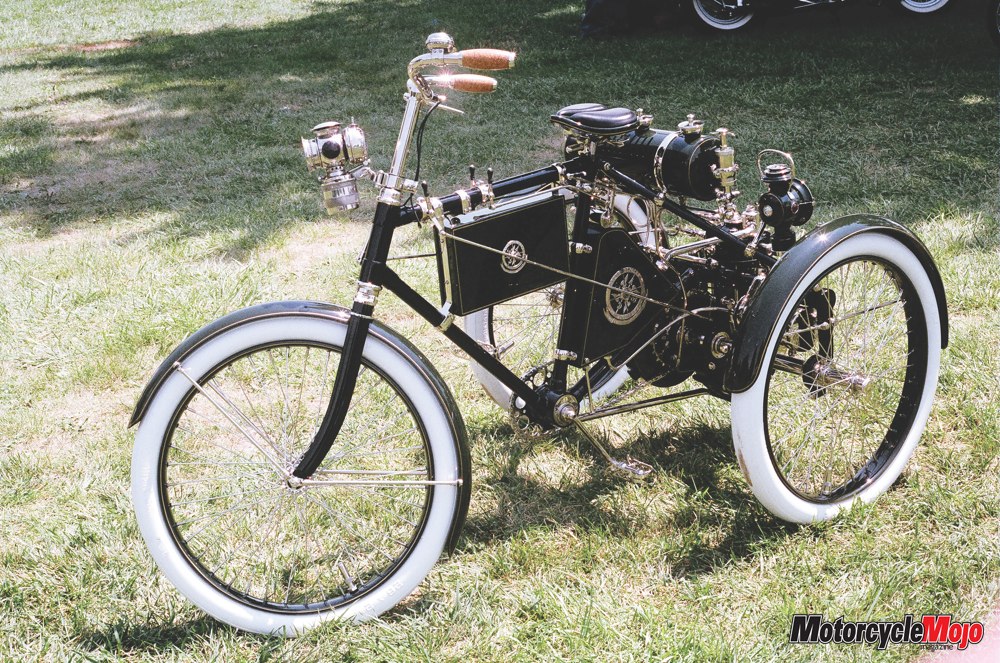
Orient Tricycle
Key specifications
Overview
Step back in time to 1898, an era teeming with innovation and the spirit of exploration, and behold the De Dion-Bouton Tricycle motorcycle, a pioneering marvel from France that stands as a symbol of early motorcycling ingenuity. As one of the first commercially successful motorcycles, the De Dion-Bouton Tricycle carved its niche in the nascent motorcycle market, appealing to both adventurers and everyday riders. With its unique tricycle configuration, it offered a blend of stability and agility, making it a favored choice for those looking to embrace the thrill of powered two-wheeled travel while still feeling secure on the road. At the heart of this remarkable machine lies a single-cylinder, four-stroke engine with a modest displacement of 211 ccm. Producing 1.50 horsepower at 1500 RPM, it may not seem like a powerhouse by today’s standards, but the De Dion-Bouton’s engineering was revolutionary for its time. The power delivery is smooth and predictable, allowing riders to navigate the cobblestone streets and country lanes with ease. Its air-cooled design and surface carburetor contribute to a straightforward yet effective fuel system, ensuring that the tricycle remains efficient and reliable on short jaunts or leisurely rides. The De Dion-Bouton Tricycle's construction reflects the craftsmanship of the late 19th century, featuring a strong Decauville steel frame that provides both durability and a sense of elegance. Weighing in at a mere 80 kg (176.4 pounds), it boasts a power-to-weight ratio of 0.0188 HP/kg, which translates into a nimble riding experience. The direct drive mechanism, utilizing a pair of gears to connect the engine directly to the rear axle, simplifies the riding experience and enhances the mechanical connection between rider and machine. The tricycle's 920 mm width offers a stable stance, making it easier to handle than its two-wheeled counterparts, inviting enthusiasts to embrace the freedom of the open road. **
Pros
- Innovative Design: The tricycle configuration provides enhanced stability, ideal for those new to motorcycling.
- Historic Significance: As one of the earliest motorcycles, it appeals to collectors and history buffs alike.
- Simplicity: The direct drive and uncomplicated engineering make maintenance straightforward for DIY enthusiasts.
Cons
- Limited Power: The modest horsepower may feel underwhelming compared to modern motorcycles.
- Weight: While light for its era, it may not offer the agility of more contemporary bikes.
- Basic Features: Lacks the advanced technology and comforts found in modern motorcycles, which may deter some riders from long-distance travel.
Technical details
Source specification data
- Make
- De Dion-Bouton
- Model
- Tricycle
- Category
- Allround
- Comments
- French made motorbike.
- Power
- 1.50 HP (1.1 kW)) @ 1500 RPM
- Clutch
- Direct drive via a pair of gears from the motor directly to the rear axle
- Fuel System
- Carburettor. Surface carburator
- Displacement
- 211.00 ccm (12.88 cubic inches)
- Cooling System
- Air
- Engine Details
- Single cylinder, four-stroke
- Dry Weight
- 80.0 kg (176.4 pounds)
- Overall Width
- 920 mm (36.2 inches)
- Power Weight Ratio
- 0.0188 HP/kg
- Wheels
- Two
- rear wheels.
- Michelin
- pneumatic tires.
- Frame Type
- Decauville, steel